Showing posts with label buying a home. Show all posts

Thursday, November 13, 2014

Do you need a fast Pre-Qual?


In today’s competitive market we understand the urgency of your pre-qualification. We acknowledge that in Today’s housing market it is very HOT and new listings go under contract just before you can make an offer. Before you begin your home search have a solid team to help you out. Meaning, you should have a Realtor who is very knowledgeable, a Broker with experience, and a Loan Officer who doesn’t take more than one day to give you a pre-qualification letter, working for you.

If your Loan Officer takes more than one day to provide you with a Pre-Qualification letter, than you could lose out on the opportunity to make an offer on a new listing.

 Have you been Pre- approved for a home? If you have started your pre-qualification process, it is imperative that you get a fast and accurate response within 24 hours after submitting all your loan requirements to the loan officer. Your prequalification is very important, this will determine how much you can afford! Your loan Officer should be able to talk to you about Loan options, rates, monthly payments and other pertaining information regarding your purchase.

This Pre-Approval letter will let your Realtor know that you are a Pre-Approved buyer. Keep in mind, without a Pre-Approval Realtors will not want to show a listing or will take you seriously.
Now, if you are needing a fast, 24 hour Pre-Qualification letter, then come test the waters with NuHome Group. We provide fast responses and give you a through presentation of home buying. Don’t hesitate to call us or get more information.

What Items do I need to get Pre-Qualified?

-Last 2 pay stubs (a month’s worth)
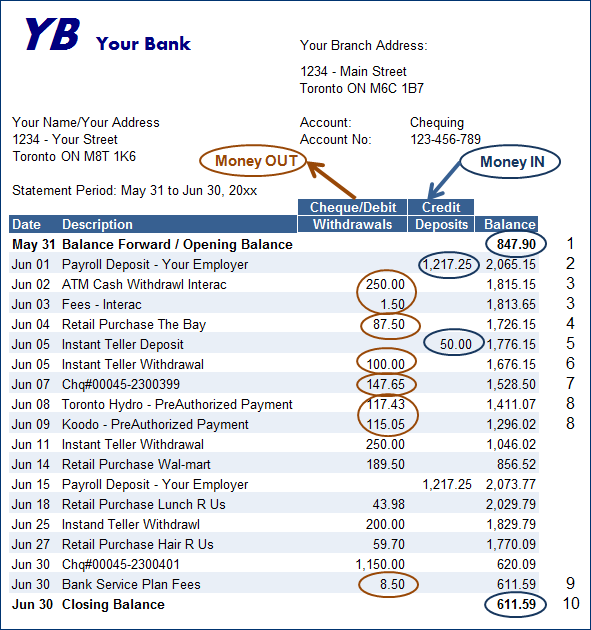
-Last 2 recent months of bank statements
-Last 2 Years of Tax Returns along with the W2’s or 1099’s
-Copy of Id and Social

Ready to get your letter? Call us before you send your documents. We can be reached at the Headquarters’ office of NuHome Group 713-373-0345 or emailed at info@nuhomegroup.com
All consultations are free and we will be more than pleased to answer any questions you may have. What are you waiting for? The time is ticking, let us earn your business!


Frank Marta
Broker/Loan Officer

NMLS: 835196/245813

Wednesday, October 29, 2014

How to Avoid delays in your closing on a Home Loan, The Series Series Two: Assets


Earlier in Series, On of How to Avoid delays in your closing on a Home Loan, we mentioned just how important your credit is for when you’re applying for a home loan. Aside from your FICO score, your assets are a huge part to your loan approval. You must prove that you have the funds to close and all funds must be sourced prior to issuing out a loan approval.
 For Residential home loans you need 2 months of recent bank statements and for Commercial loans we would need 3 months of recent bank statements.
For Example… If you apply in the month of October 2014 NuHome would need August 2014 - September 2014 bank statements for a Residential Home Loan. Now, if you’re getting a Commercial Loan then you would need the bank statements for July 2014 – September 2014.
Once we have received your bank statements we will look through them thoroughly. Please be aware that any cash deposits over $100.00 MUST be sourced.
Gifted Funds                                                                           
A “gift” is allowed only when it is given by an immediate family member.  It must be considered a gift and NOT a loan which will be requested to be paid back. If you received a gift from a family member you must have a gift letter stating: who gave you the gift, when it came to your account, and the donor must be willing to provide their bank statement. The Donors bank statement will prove that the donor is in a good financial position to gift you those funds. This is what we call the “Gift Test”. You may scratch your head and say... ”Hmm. well why is their bank statement relevant?”
The Gift Test
Here’s why… Let’s say Uncle Sam gives you a gift of $7,000.00 for closing cost but he only has $7,300 in his account. There is no way he is any position to give you that gift. Based on the ability to give a “Gift Test”, which is listed below, would fail because this bank statement shows that he would be left with no money for himself.
Bank of America
10/01/14 Cash Deposit
$700.00
10/05/14 Company Check Deposit
$3,000.00
10/15/14 Company Check Deposit
$4,000.00
10/16/14 Company Check Bonus Check
$300.00
10/17/14 Cash Withdrawal
$7,000.00
                        Current Balance                                                            $300.00

Now let’s talk about Cash Deposits… If you or your donor has bank statements that have cash deposits of $100.00 or more they must be sourced. If any cash deposits over $100.00 cannot be sourced that amount will be backed out of total funds to close. Cash deposits may be sourced by invoices or other donor’s gift letter.
For instance... If Uncle Sam provides us with a bank statement, like the one that is listed below, and says that a family member gave him that cash to deposit on October 1, 2014, then we would need a gift letter from that family member along with a Gift Test. Everything must add up and must be sourced.

Bank of America
10/01/14 Cash Deposit
$700.00
10/05/14 Company Check Deposit
$3,000.00
10/15/14 Company Check Deposit
$4,000.00
10/16/14 Company Check Bonus Check
$300.00
10/17/14 Cash Withdrawal
$7,000.00
                        Current Balance                                                            $300.00
            After we have received all gift letters and source all cash, we will be able to issue your loan approval. This final bank statement will need to be an original copy or print out and signed copy from a bank representative. By us addressing these issues ahead of time, we will make the loan process a lot faster once it goes to underwriting. Keep in mind that if we do not receive the assets and gift letters, then there will definitely be a delay in your loan process.


For more information on this subject please contact us by phone 713-373-0345. Frank Marta NMLS# 245813 | 835196

Thursday, October 9, 2014

How to avoid delays in your closing on a Home Loan, The Series


Series One: Credit Score
                                                                                      
            Like all buyers, you see a home, want it, and then you go pursue it. You go set up an appointment with a Mortgage Broker and expect to get a smooth closing. Right? Of Course! But not all prospect buyers know exactly what documents they need or what credit score they need in order to get the closing done in 30 days or less. Keep reading and keep scrolling down to unlock your full potential on a fast and easy home loan process.


Credit Score
            Although we at NuHome Group go down to 580 FICO, the higher credit scores the better rates you get. One thing lenders are really looking at is your credit report blemishes. This includes any: judgments, foreclosures, bankruptcies, late payments, broken leases, and disputes. The guidelines ask that you remove any disputed accounts, pay any judgments, and any broken leases prior to application. For home buyers who want to buy a home but have had a foreclosure or filed for bankruptcy don’t be discouraged just yet, we have special loan programs just for you!


Why should I remove my disputes before applying for a loan?  Won’t the lender help me?
            Once you have applied for a loan, gotten approved, and your loan goes to underwriting, the underwriting department will send back a list of conditions in which the borrower would have to comply to and bring forth the required documentation need for closing. If you have a dispute that normally doesn’t go away in a day or two, it takes time.  The longer the borrower takes to bring the listed documentation, the longer it takes to the keys to the house. If you do have disputes and don’t clear them right away then your loan goes into suspension which delays your loan even longer! We understand your need to close fast and get into the home in which you desire, so we prevent any delays that will cause headaches and heartaches; therefore we do not issue approvals on clients whom haven’t removed their disputes. If you go to another company and they accept disputes please BEWARE, and be prepared to deal with a lot of problems.


For more information about how to avoid any delays in your closing on a home feel free to give us a call (713) 373-0345. Brought to you by NuHome Group LLC. Frank Marta, President, NMLS# 245813 | 835196


Wednesday, August 6, 2014


I help a lot of first time home buyers and as a first time home buyer I understand there are many questions or concerns that they may have.  I simply put together a short summary of the Loan Process here at NuHome Group.  This summary is very brief to help not complicate things.
Qualification- you would need to provide certain documentation to be pre-qualified. Thirty days of Pay stubs, 2 recent months bank statements, 2 years tax returns w/ W-2's (2013-2012) or 1099’s and other forms of income may be requested, a front and back copy of your social security and photo ID is required.
Approved- you must know that the approvals are only good for 90 days, which is including finding your house. Thus only gives you about 45-60 days to find the house.  If you can’t find a home within that time frame then you may need to be re-qualified.

Find house- work with your Realtor/ Representative to find you house.  Remember if you are buying with FHA Financing there may be some restrictions.  I have noticed that there have been many cases of people having trouble finding houses where the seller's don't want FHA financing.  This can be troublesome.  So make sure which you know what type of financing your obtaining (FHA or Conventional). 

Negotiating the deal- there are some things that you should know about when negotiating for your home.  If you ask for seller contribution for the purchase of your house the seller will give you the negotiated amount to be applied to your closing costs.  FHA allows 6% and Conventional allows 3% or closing.  If the seller pays the Title Policy and survey this will help lower closing costs. 

Executed Contract- Once the offer is accepted you will be expected to pay the Earnest money to the Title Company for them to take the house off of the market.

Inspection- Once you have an executed contract you would need to have an inspection on the property you’re in process of buying. This very crucial and will help you know what exactly is wrong with the property if any.  For example, this inspection will notify you whether the property has: Roof, electrical, AC, or plumbing damage.  These are some of the the major things you are normally confronted with. If your problem is cosmetic then, it is at the discretion of both the seller and the buyer.

Appraisal- an appraisal is required for the banks to review. This is a professional analysis of the property and its value.

Disclosures- Once you have a pre-approval and contract then you would set an appointment at your earliest convince to sign disclosures so we can send your file to underwriting.

Loan Submission- Loan is ready to be reviewed by a Lender. In other words, your loan will be sent to a bank for review.

Conditional Approval- the loan will have conditions to be met in order for the approval.  Once these conditions are satisfied then your loan would be sent to closing.

Closing- Before we can close your loan or schedule for closing we would need the Lender to provide us with the closing instructions for the Title Company.

Scheduling closing- Depending on the title company and the TIME OF MONTH!  We will schedule the closing based on the Title Company’s availability and the buyer’s convenience and availability.

Closing table- you would go to the Title Company and sign all documents.

Funding- Certain documents are sent to Lender to review and assure that they have been signed.

Keys- keys are given to you when the loan is funded and money is dispersed.

Move in- Normally, 3 days before closing, you can start transferring the utilities so you can have your utilities by your official move in date.
That's about it.  No problem, right?!  I hope that this helps you better understand NuHome’s Loan Processing.

For more information about this subject or about loans contact us by phone at (713) 373-0345 or via emailinfo@nuhomegroup.com.
Be sure to check out our website!!!
www.nuhomegroup.com

Friday, July 25, 2014

Do I Need a Pre-Approval Letter to Make an Offer?


Do I Need a Pre-Approval Letter to Make an Offer?
At the end of the day, you don’t necessarily NEED a pre-approval letter to make an offer on a piece of property.  But nowadays, with so few properties on the market, and so many multiple-bid situations, it’s often a requirement just to hear back.

Sure, you can tell your real estate agent to tell the listing agent that you’ve got an 800 credit score, $1 million in the bank, and a job that pays you $500,000 a year. And they might say fine, skip the pre-approval.
But chances are that’s not your financial profile, so just to play ball and keep everyone happy, it often makes sense to get the pre-approval done. It will also strengthen your offer.
And as I alluded to earlier in this post, it’s good to know where you stand as well.  You might think you’re a sure shot at getting a mortgage, but surprises aren’t all that uncommon and mortgage guidelines change all the time.
So a pre-approval could actually save you time and money, despite being a task that needs to be taken care of upfront.  It shouldn’t take very much work to get one anyways.
Just remember not to feel obligated to use the bank that furnishes the pre-approval letter for you!

 For more information about loans or this subject please contact us via email atinfo@nuhomegroup.com or give us a call at 713-373-0345


NuHome Group 713-373-0345
1445 North Loop West Suite 105 Houston, TX 77008
Frank Marta NMLS# 245813/835196

Wednesday, July 16, 2014

Mortgage Related Terms: "Shop Talk"


Understanding the “Shop Talk” between the various industry professionals is quite important. If you do not know the terms it may be a bit difficult to make a home buying decision, therefore we wanted to highlight the top terms that most borrowers will hear several times throughout the approval and home buying process.
We have assembled a list of key term and hope that this gives you greater confidence when discussing important topics that may impact your transaction.
  • Amortization Schedule: A schedule of payments showing the amount applied to the principal and interest through the payoff.
  • Annual Percentage Rate (APR): The effective rate of interest that includes loan related fees.  The APR helps determine the total cost of borrowing a loan and is used to compare loans that are advertised with different note rates.
  • Adjustable Rate Mortgage (ARM): As opposed to a fixed-rate mortgage where the payment is set for the full term of the loan agreement, an ARM is tied to a specific financial index and may adjust after a set amount of time.
  • Buydown:Where a borrower pays an up-front fee to lower the mortgage rate and monthly payment.  Rate Buydown’s can be used to help a borrower qualify for a loan, or as a means of negotiation where the seller would contribute to a lower rate in order to entice a buyer to purchase their property.
  • Combined Loan-to-Value (CLTV): The total amount of mortgage obligations on a particular property compared to the fair market value.
  • Debt-to-Income Ratio (DTI): A borrower’s minimum monthly liability payments divided by their gross monthly income.
  • Default: Failure to fulfill an obligation to pay a mortgage.
  • Delinquency: Late payments on a monthly liability.  Creditors generally report payments to credit bureaus once the delinquency goes past 30 days.
  • Disclosure: A big stack of documents that the lender, buyer and sellers sign during a real estate purchase or mortgage transaction.  These disclosures may also notify all parties involved of their rights and obligations.
  • Discount Point: The amount paid to decrease an interest rate. 
  • Fico Score: The three credit reporting agencies in the United States, Equifax, Experian, and TransUnion, collect data about consumers used to compile credit reports. The credit agencies use FICO software to generate FICO scores, which are sold to lenders.
Each individual actually has three credit scores at any given time for any given scoring model because the three credit agencies have their own databases, gather reports from different creditors, and receive information from creditors at different times.
  • Fixed Rate Mortgage: A mortgage loan where the interest rate on the note remains the same through the term of the loan, as opposed to loans where the interest rate may adjust or “float”.
  • Good Faith Estimate (GFE): A good faith estimate must be provided by a mortgage lender or broker in the United States to a customer, as required by the Real Estate Settlement Procedures Act (RESPA). The estimate must include an itemized list of fees and costs associated with your loan and must be provided within three business days of applying for a loan.
These mortgage fees, also called settlement costs or closing costs, cover every expense associated with a home loan, including inspections, title insurance, taxes and other charges.
A good faith estimate is a standard form which is intended to be used to compare different offers (or quotes) from different lenders or brokers.
  • Gross Income: Total taxable income which is generally verified by a lender through tax returns and W2′s.
  • Home Equity Line of Credit (HELOC): A line of credit secured by real estate.
  • HUD-1 Statement: A comprehensive and itemized list of closing costs prepared by a closing agent that detail all of the financial figures in a mortgage refinance or purchase transaction.
  • Joint Liability: When more than one person applies for and secures a mortgage.
  • Jumbo Mortgage: A mortgage with a loan amount above conventional conforming loan limits. This standard is set by the two government-sponsored enterprises Fannie Mae and Freddie Mac, and sets the limit on the maximum value of any individual mortgage they will purchase from a lender.
Fannie Mae (FNMA) and Freddie Mac (FHLMC) are large agencies that purchase the bulk of U.S. residential mortgages from banks and other lenders, allowing them to free up liquidity to lend more mortgages.
When FNMA and FHLMC limits don’t cover the full loan amount, the loan is referred to as a “jumbo mortgage”. The average interest rates on jumbo mortgages are typically higher than that of conforming mortgages.
  • Loan-to-Value (LTV): The loan-to-value (LTV) ratio expresses the amount of a first mortgage lien as a percentage of the total appraised value of real property. For instance, if a borrower wants $130,000 to purchase a house worth $150,000, the LTV ratio is $130,000/$150,000 or 87% (LTV).
Loan to value is one of the key risk factors that lenders assess when qualifying borrowers for a mortgage. The risk of default is always at the forefront of lending decisions, and the likelihood of a lender absorbing a loss in the foreclosure process increases as the amount of equity decreases. Therefore, as the LTV ratio of a loan increases, the qualification guidelines for certain mortgage programs become much stricter. Lenders can require borrowers of high LTV loans to buy mortgage insurance to protect the lender from the buyer default, which increases the costs of the mortgage.
The valuation of a property is typically determined by an appraiser, but there is no greater measure of the actual real value of one property than an arms-length transaction between a willing buyer and a willing seller. Typically, banks will utilize the lesser of the appraised value and purchase price if the purchase is “recent.” What constitutes recent varies by institution but is generally between 1–2 years.
  • Loan Rate Lock:Where the loan officer locks a specific rate with a lender for a set amount of time.
  • Liquid Assets:Money in a bank or investment account that can be obtained quickly.
  • Loan Origination Fee: A fee paid by a borrower to a lender for obtaining a mortgage loan.
  • Loan Servicer: A mortgage servicer is the company that borrowers pay their mortgage loan payments to. Mortgage servicers either purchase or retain mortgage servicing rights that allow them to collect payments from borrowers in return for a servicing fee. The duty of a mortgage servicer varies, but typically includes the acceptance and recording of mortgage payments; calculating variable interest rates on adjustable rate loans; payment of taxes and insurance from borrower escrow accounts; negotiations of workouts and modifications of mortgage upon default; and conducting or supervising the foreclosure process when necessary.
Many borrowers confuse mortgage servicers with their lender. A mortgage servicer may be a borrower’s lender, but often the beneficial rights to the payment of principal and interest on mortgages are sold to investors such as Fannie Mae, Freddie Mac, Ginnie Mae, FHA, and private investors in mortgage securitization transactions.
  • Mortgage Insurance: Mortgage insurance (also known as mortgage guaranty) is an insurance policy which compensates lenders or investors for losses due to the default of a mortgage loan. Mortgage insurance can be either public or private depending upon the insurer.
Mortgage Backed Security: A mortgage-backed security (MBS) is an asset-backed security or debt obligation that represents a claim on the cash flows from mortgage loans, most commonly on residential property.
First, mortgage loans are purchased from banks, mortgage companies, and other originators. Then, these loans are assembled into pools. This is done by government agencies, government-sponsored enterprises, and private entities, which may offer features to mitigate the risk of default associated with these mortgages.
Mortgage-backed securities represent claims on the principal and payments on the loans in the pool, through a process known as Securitization. These securities are usually sold as bonds, but financial innovation has created a variety of securities that derive their ultimate value from mortgage pools.
  • Private Mortgage Insurance (PMI): Private mortgage insurance (PMI) is insurance payable to a lender or trustee for a pool of securities that may be required when taking out a mortgage loan. It is insurance to offset losses in the case where a borrower is not able to repay the loan and the lender is not able to recover its costs after foreclosure and sale of the mortgaged property.
  • Acceptance:Generally used when a seller accepts the terms presented in a purchase contract offer.
  • Contingency:A “Subject To” provision in a purchase contract or mortgage approval that requires more work or documents to be submitted prior to a final decision to be completed.
  • Due-Diligence: The period of time described in a purchase contract for the buyer and seller to perform certain duties such as appraisal, loan approval and inspections.
  • Deed of Trust: In real estate, a trust deed or deed of trust, is a document wherein specific financial interest in the title to real property is transferred to a trustee, which holds it as security for a loan (debt) between two other parties.
One is referred to as the trustor the other referred to as the beneficiary. In its simplest terms the trustor would be the receiver of money and the beneficiary would be the lender of money. The trust deed document most likely would be recorded (constructive notice) with the County Recorder where the property is located as evidence of and security for the debt.
When the loan is fully paid, the monetary claim on the title is transferred to the borrower by reconveyance to release the debt obligation. If the borrower defaults on the loan, the trustee has the right to foreclose on and transfer title to the lender or sell the property to pay the lender from the proceeds.
  • Earnest Money: The deposit money deposited in escrow by a buyer in good faith to secure a purchase transaction.
  • Escrow: A third party that holds money or property in trust until a transaction has been complete.  There are several uses for the word “Escrow” in the real estate or mortgage process.
Closing Escrow describes when a purchase transaction is complete. An Escrow or Impound account involves having your annual property and hazard insurance payments handled by a third party and taken out of monthly installments in a mortgage payment.
  • Equity: The difference between a loan balance and a property’s fair market value.
 For more information about this subject and about loan questions please contact Frank Marta Texas Home Loan Specialist. Info@nuhomegroup.com or give us a call (713) 373-0345.


NuHome Group 713-373-0345
1445 North Loop West Suite 105 Houston, TX 77008
Frank Marta NMLS# 245813/835196

Thursday, July 3, 2014

How do I repair my credit?


Most of us, at some time or another, have done something to affect our credit rating, perhaps without even knowing it. A late or missed credit card or home mortgage payment is just one example. When you buy a home, your real estate agent will encourage you to get pre-approved for your mortgage. It's during the home loan application process when problems often come to light.
For home loan purposes, a score of 650 or higher generally indicates a good credit history and will make it easier for you to secure a mortgage. If your score falls between 620 and 650, your borrowing capability will be examined more closely. And if you rate below 620, you may have a credit crisis. When you’re planning on buying a home, your credit score will have a big impact on your interest rate and loan terms. If your score falls on the lower end of the scale, you’ll pay a higher interest rate. Dip too low, and you may not get approved at all.
Blemished credit is both stressful and costly, but it's not the end. As hopeless as the situation might seem, bad credit won't last forever. There are things you can do right now to begin improve your credit score.
In my 12 years of being a loan officer I am always asked, “What should I do to fix my credit?” I normally recommend 3 things to do.

1. If you have a serious credit problem and/or a lot of collections (anything over 6 collections), I recommend you go to a credit restoration company. If your collections are $500 and under, I suggest you pay them and get them out of the way. As a rule, If your collections exceed $1,000 and are more than 2 years old, you can leave those alone for now. When you are trying to repair your credit with credit restoration companies its best to go with local companies, it would be most convenient for you. In addition to this, you would need to have at least 3 open and current lines of credit.

2. Secondly, if you do not have 3 lines of credit, you should open 3. Understand that if you have bad credit or low credit scores it would be difficult to find someone to give you a loan. Here’s the trick! Upon your first payment, you should go pay off 50% of your loan. For instance, if you get a line of credit for $500 pay off $250 on the first payment, if you get a line of credit for $1,000 pay off $500 etc. This will give you an immediate boost of 10+ points on your credit score. Just be mindful that you have to pay off 50% or more on your first payment.

3. Lastly, the easiest thing you can do is visit your local Credit Union and open 2 secure loans. If you are married open jointly secure credit lines. For the third account, open a secure credit card. You should only charge 10% of the limit and never exceed 10%, this will give you a boost on your credit report.


It's important to note that repairing bad credit is a bit like losing weight: It takes time and there is no quick way to fix a credit score. 

If, after all your work, you still score below the 620 mark, it doesn't mean that you won't qualify for a home loan. It may mean, however, that your mortgage will take longer to process and the terms and interest rate may not be as good as you were hoping for. Talk to your real estate agent about referrals to high-risk lenders.
Repairing bad credit can take many months to a year or more. But when you're ready to buy a home, you'll be glad you took the time to improve your score - and your mortgage payment will be lower because of your efforts.


NuHome Group 713-373-0345
1445 North Loop West Suite 105 Houston, TX 77008
Frank Marta NMLS# 245813/835196

Wednesday, July 2, 2014

30 Day Closing Guaranteed!


30 DAY CLOSING GUARANTEE
Terms and Conditions
Please review the terms and conditions below.
Disclaimers
Pre-Approval and Closing Guarantee are based on a preliminary review of Borrower's credit information only and is not a commitment to lend. The Closing Guarantee is subject to verification of the information submitted on Borrower's application, in addition to Borrower’s property eligibility.
Rules and Restrictions
1.   The "30 Day Closing Guarantee" timeframe begins upon receipt of the pre-approved Borrower's completed application and executed purchase and sales agreement.
2.   A mortgage payment, for the purposes of this promotion, is defined as principal and interest up to $1,500.
3.   Any additional required documentation/information must be provided by Borrower within 48 hours of each request.
4.   Any alteration to the loan amount or loan terms by, or per request of, Borrower will invalidate the guarantee.
5.   Any alteration to the closing date documented in the original purchase and sales agreement will invalidate the guarantee.
6.   Should Borrower choose their own title agent, title vendor must submit preliminary title work within 10 days of initial application.
7.   Appraisal must be scheduled within 24 hours of initial contact by appraiser.
8.   Property must appraise at or above the sale price.
9.   All pre-closing conditions must be satisfied 5 days prior to the scheduled closing date.
10.                Closing dates extended due to a delay in completion of new construction, and improvements or repairs made to an existing property, will invalidate the guarantee.
11.                Loans for new construction properties require a final certificate of occupancy for consideration.
12.                Fraudulent or purposely misleading information provided by Borrower will invalidate the guarantee.
For more information about this subject and about loan questions please contact Frank Marta Texas Home Loan Specialist. Info@nuhomegroup.com or give us a call (713) 373-0345
NuHome Group 713-373-0345
1445 North Loop West Suite 105 Houston, TX 77008

Frank Marta NMLS# 245813/835196